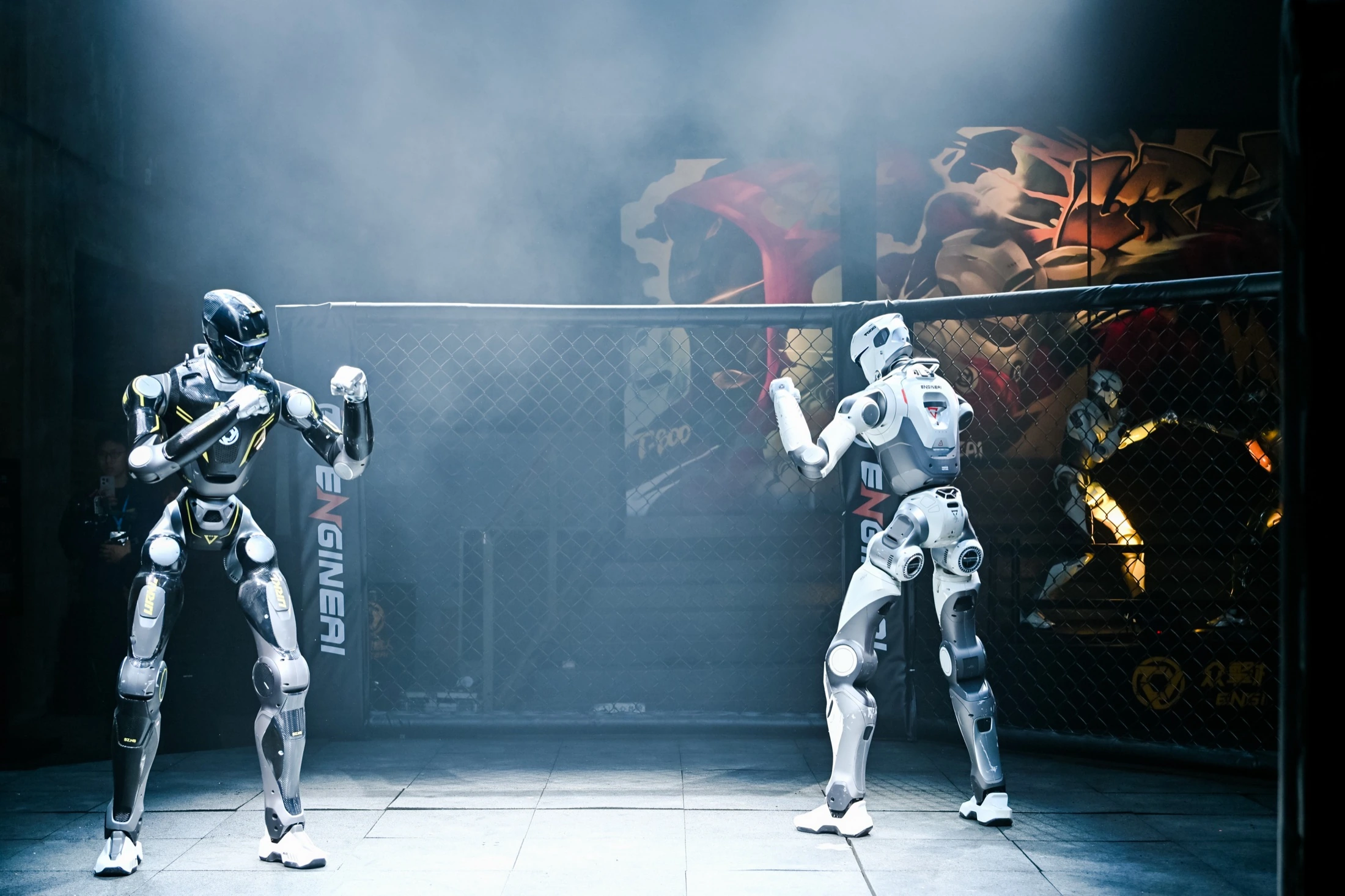
The camera sees a body strike, fall and recover. The result also depends on operators and software outside the frame. A useful broadcast selects the information that explains a decision without covering the screen in data.
Label the control mode
The first graphic should state who or what is controlling the robot. Useful labels could distinguish direct teleoperation, assisted control and autonomous action. Display them when the mode changes, then clear the screen.
URKL's qualification environment includes motion data, simulation and autonomous recovery tasks. The T800 product specification also lists a handheld remote control. Those facts show why a generic “AI-powered” caption is inadequate. A viewer needs the mode used in the match, supplied by the organizer for that specific round.
Replay cause and consequence
Impact replay should answer a question: why did the robot fall, leave the boundary or stop? A wide arena angle establishes position. A tighter angle shows contact. A synchronized view of the operator or team can reveal whether a command, recovery attempt or stoppage followed.
If force or joint data is available, it should be used only with units, sampling information and a clear relation to the official score. Decorative meters weaken trust because viewers cannot tell whether they measure the robot, estimate the image or animate a production graphic.
Keep the repair bench in the story
Between rounds, cameras should show inspection and replacement work without exposing private screens or code. A simple record of repair time and changed modules explains whether the next appearance uses the same hardware state.
This also creates continuity across a season. A robot can have a history of recoveries, stoppages and replaced parts, while the people responsible for keeping it operational become identifiable members of the team.
Build a minimum broadcast record
Every match archive should retain the programme feed, at least one continuous arena angle, official round scores, control-mode declarations, referee decisions and timing data. If teams can appeal, the organizer should define which recordings and machine logs constitute the official record.
The broadcast layer should connect the visible event to the decisions and evidence behind the result. Claims about autonomy, force or precision belong on screen only when the rules and recorded data support them.
The production model below is ClankerSports editorial work. URKL has not confirmed every feed or data field described here.
Sources and reporting notes
- EngineAI: URKL detailed competition rules
- EngineAI: Online qualifier tasks and examples
- EngineAI: T800 product specifications
Competition and platform documents establish the available context. Broadcast recommendations are ClankerSports editorial work.