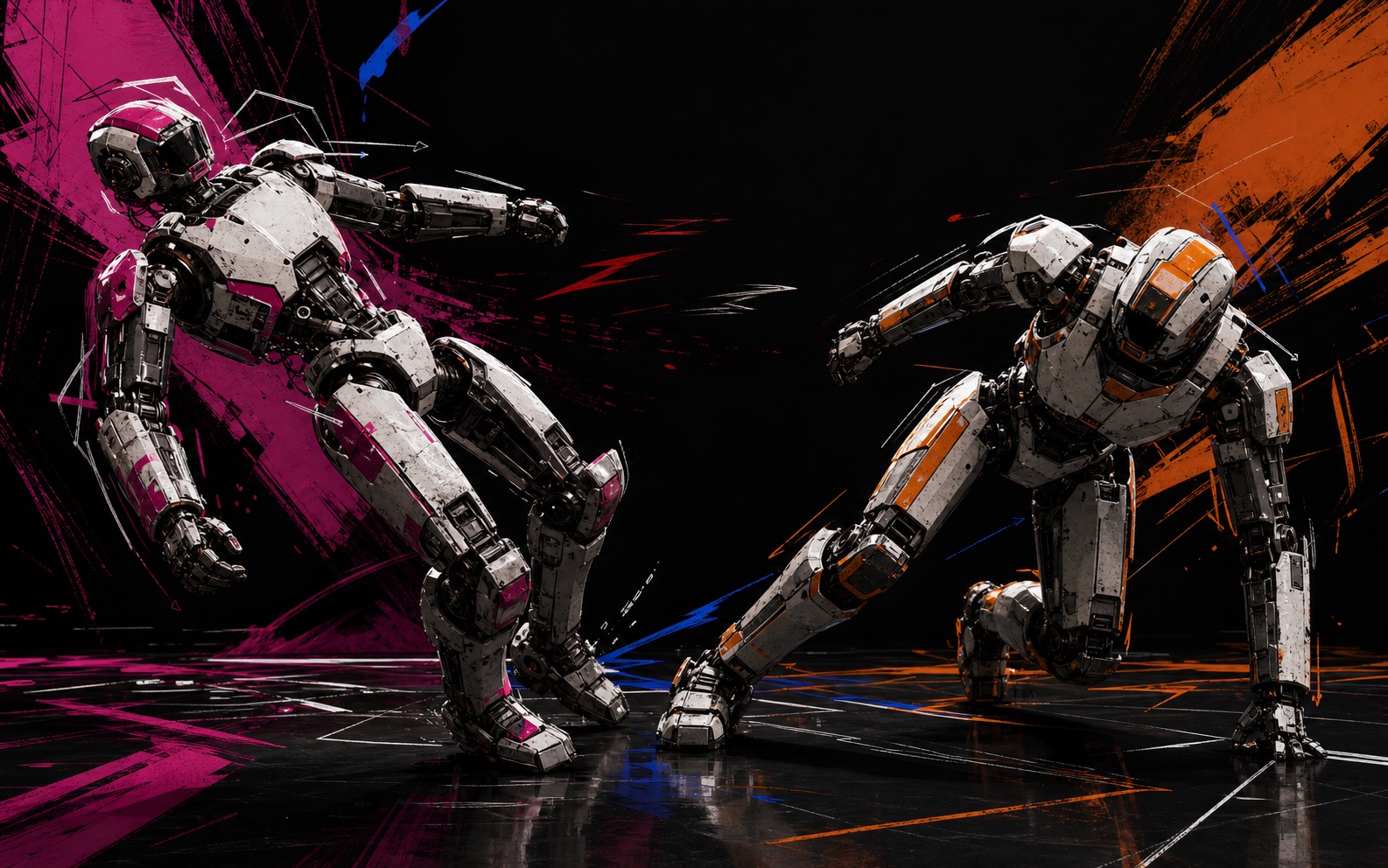
Two robots in an arena produce footage. A competition also needs comparable results across teams, venues and dates. That starts with a versioned rulebook available before the match.
Define the hardware boundary
URKL starts with a useful constraint by designating EngineAI's T800. A platform name is only the first layer. Teams also need to know which edition, sensors, compute modules, batteries and armor are standard; which parts can be modified; and how compliance is inspected.
If repairs and replacements are allowed, the rules should identify controlled parts and the time available. Otherwise a nominally identical platform can produce unequal access to hardware.
State the control model
The format should disclose whether the robot is directly operated, assisted by onboard stabilization, driven by learned policies or autonomous for a defined task. Several modes can coexist, but each match must label them consistently.
The rule also needs a boundary for communications failure. A lost link, delayed command and onboard software crash are different incidents even when each leaves a robot stationary.
Publish scoring and stoppages
Rounds need a duration, a method for scoring valid contact, a definition of knockdown or immobilization and a tie process. Referees need explicit authority to stop unsafe motion, battery faults or structural failure.
URKL publishes detailed qualification tests for recovery, locomotion and specific combat movements. The main-tournament section is still pending. That section needs to explain the live matches that produce the season standings.
Record the evidence
A minimum official record should contain round scores, penalties, stoppages, declared control mode, repair time and the video angles available for review. Appeals should specify a deadline, who decides and which evidence can change a result.
Version the rulebook
Rules will change as organizers discover new failure modes. Each revision should carry a date and version number, with a short change log. Teams should know which version applies before deployment, while viewers should be able to read the same document after the event.
Different leagues can choose different styles of robot combat. Every league still needs enough public information for teams and viewers to compare results and challenge decisions.
The checklist is a ClankerSports editorial standard. References to URKL identify what is currently public and what remains pending.
Sources and reporting notes
- EngineAI: URKL competition overview
- EngineAI: URKL detailed competition rules
- EngineAI: T800 product specifications
- EngineAI: T800 protective armor
The URKL main-tournament section remained forthcoming when checked on 1 August 2026.