Skip to the story
CLANKERSPORTS CLANKERSPORTS REVIEW

THE FIELD NOW1 / 6

CLANKERSPORTS / INTERACTIVE STORY

THE PATH TO
PHYSICAL AI.

Intelligence becomes physical when perception, decisions and recovery have to survive contact with the real world.

This is a map of the engineering paths—not a prediction of one inevitable future.
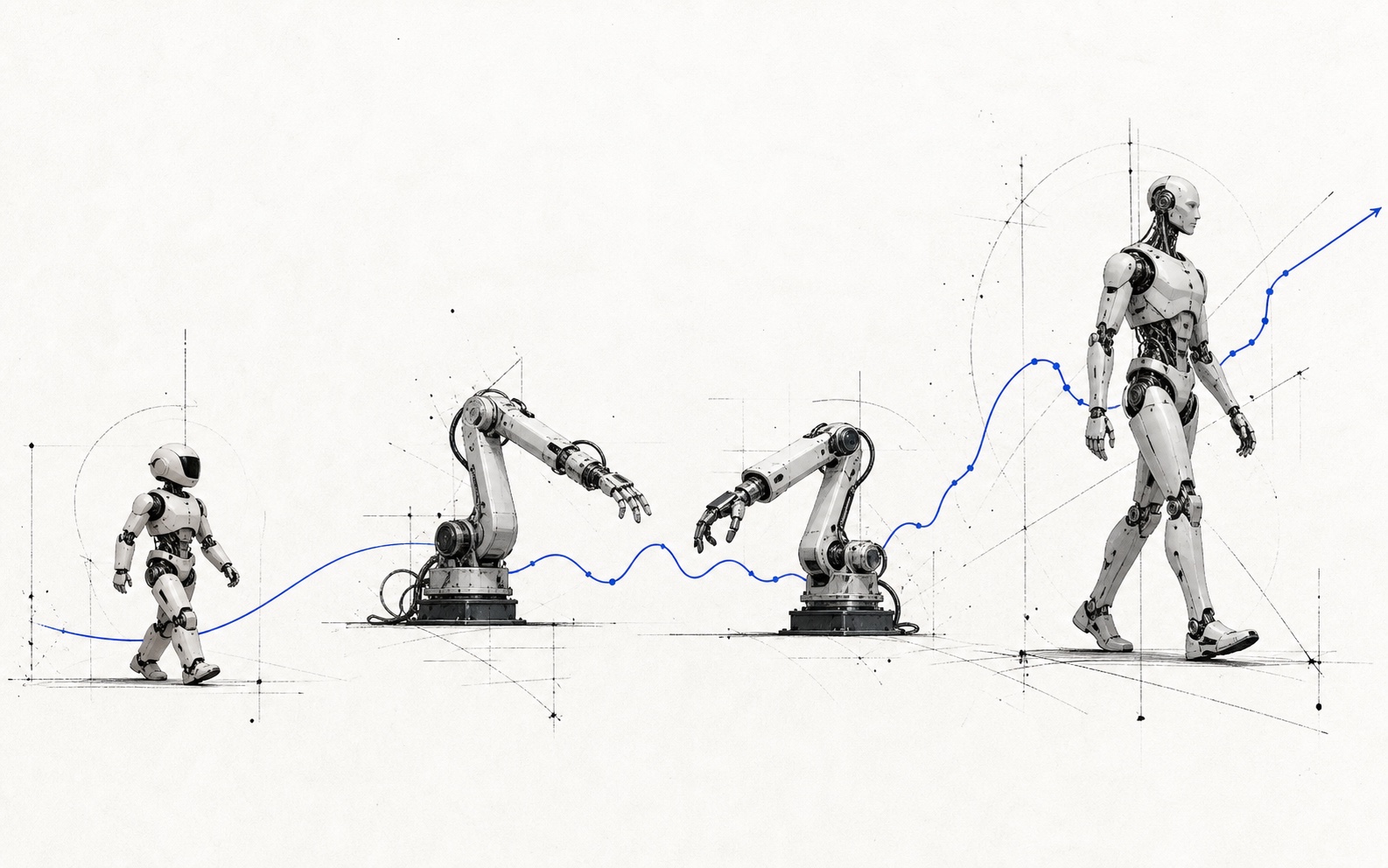
Multiple robot forms connected by a trajectory on a white technical drawing
One destination. Several bodies, control systems and training routes.

THE FOUNDATION

THE BODY
CLOSES THE LOOP.

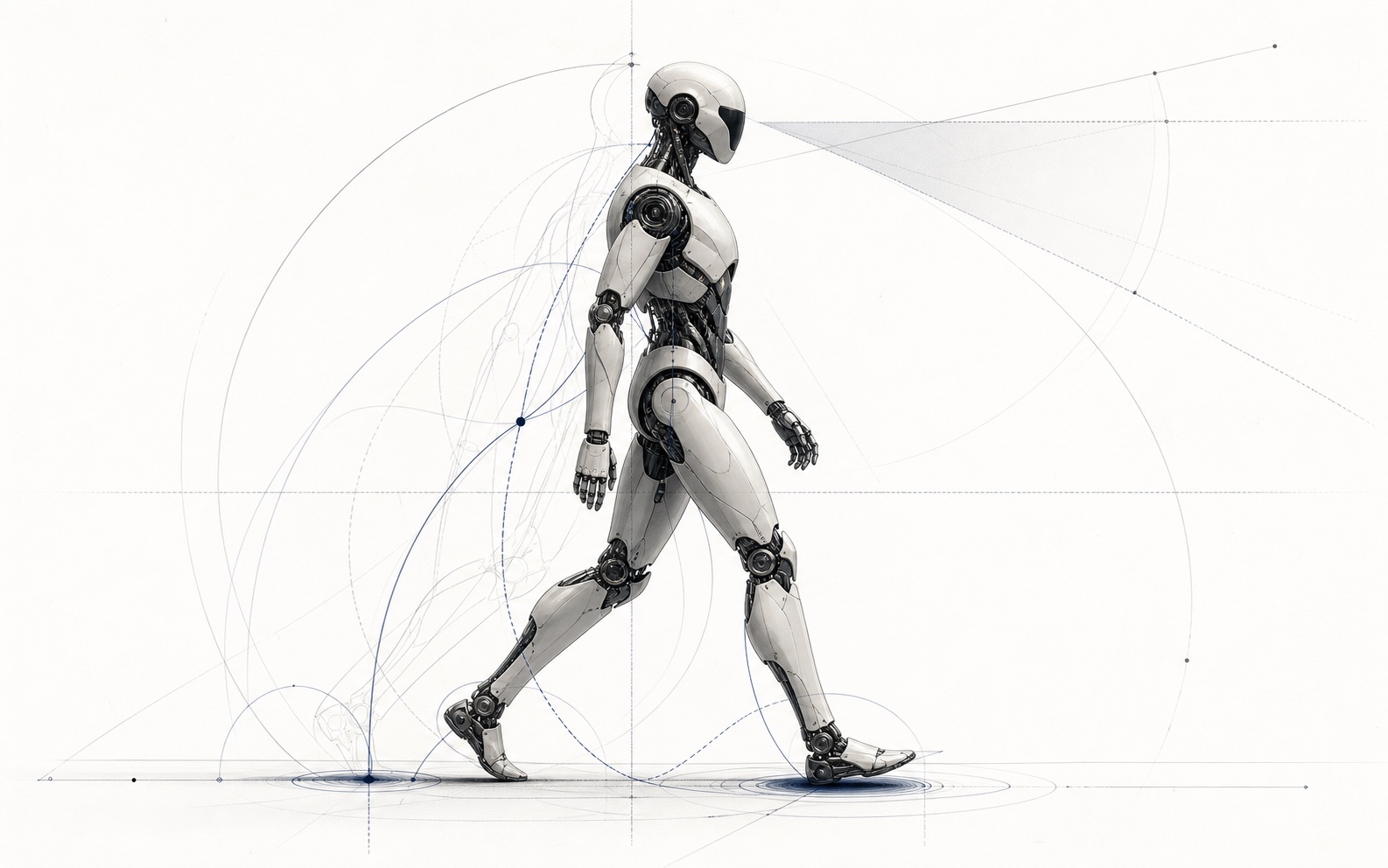
A robot does not act once. It senses, plans, moves, measures the result and corrects itself again.

Humanoid robot walking over a layered technical diagram
  1. PerceiveTurn cameras, force and joint data into a usable state.
  2. DecideSelect an action within the task, body and safety limits.
  3. ControlTranslate intent into stable motion at machine speed.
  4. RecoverDetect failure, regain balance and update the next action.

THE FIRST FORK

WHO
LEADS?

Pick the source of intent. Your choice determines the operating loop in the next scene.

ASSISTED AUTONOMY

HUMAN INTENT.
MACHINE REFLEX.

The operator carries timing and strategy. The machine handles the continuous work of staying upright, safe and responsive.

  1. IntentThe human selects a direction, action or tactical goal.
  2. AssistanceThe system converts that intent into feasible motion.
  3. ContactThe body meets latency, force and an imperfect surface.
  4. RecoveryFast control stabilises the machine before the next decision.

THE SECOND FORK

HOW FAR CAN
IT ADAPT?

The control model is only the first decision. The next is how far the system may move beyond tested conditions.

Current route: Human-led

THE NEXT TEST

WATCH
THE RECOVERY.

Progress is not another isolated trick. It is reliable behaviour across longer tasks, harder contact and less controlled environments.

Your path: Human-led / Validated envelope

Continue with ClankerSports Review

Longer tasks

Can the system maintain useful behaviour without frequent resets?

Reliable recovery

Can it detect a mistake and return to a workable state?

Safer contact

Can force and motion remain controlled around people and machines?

Lower cost

Can training, repair and deployment work beyond a single showcase?