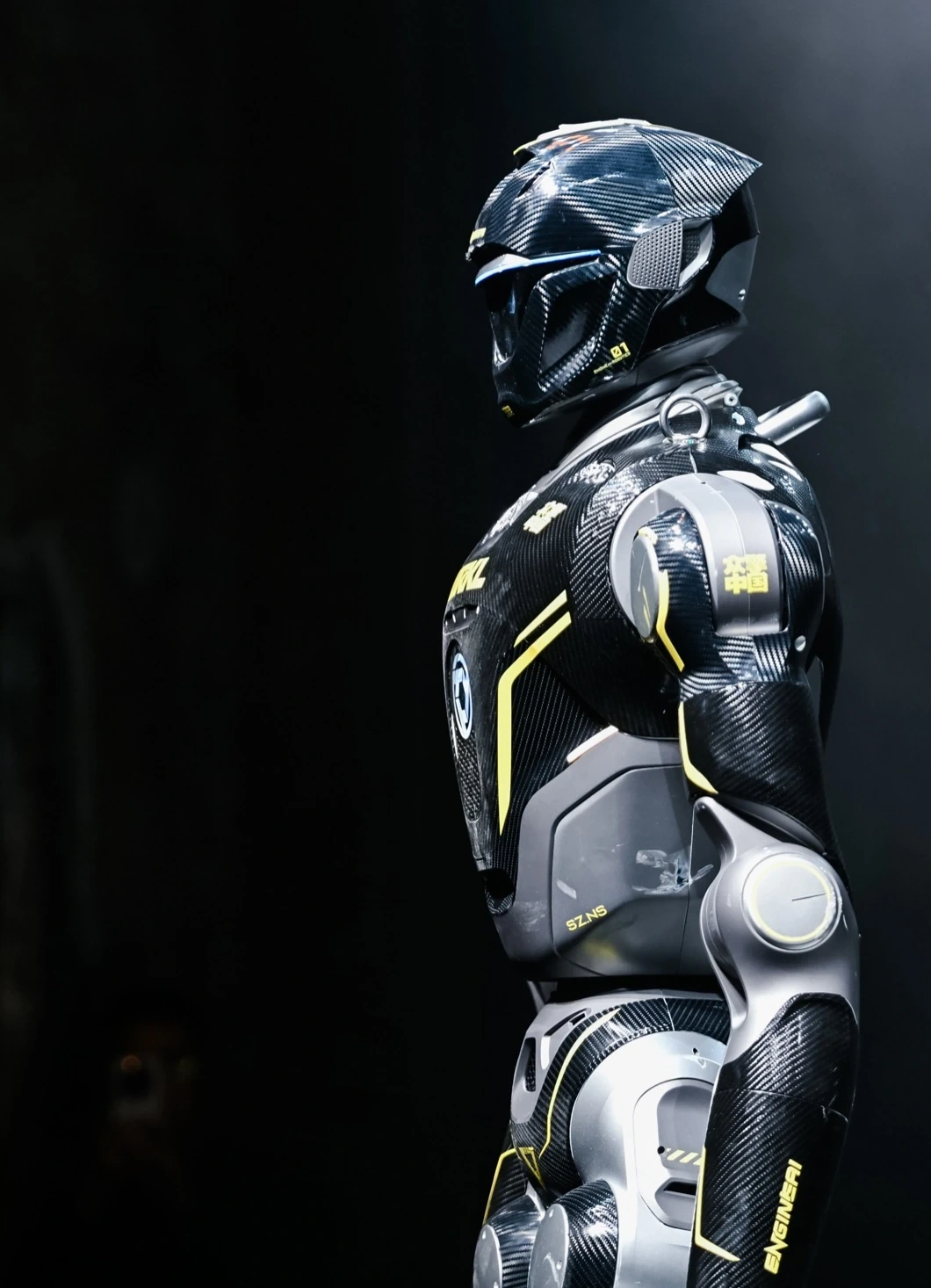
The first public URKL bout ended in a 3–2 decision after five rounds. That result is easy to report and difficult to interpret because the league's published rulebook still leaves the main-tournament format to a later announcement. Robot combat needs criteria that spectators, teams and officials can apply to the same sequence.
Start with valid contact
Judges need a definition of a scoring strike. Contact alone is a weak measure: a glancing touch and a controlled blow should not carry the same value. The rule should specify permitted target areas, prohibited contact, whether force is measured, and whether a strike counts when the attacking robot falls or leaves the boundary.
URKL already applies this kind of precision in qualification. Its strike tests require a complete motion, direct target impact and a return to fighting stance. Main matches need an equally legible standard, even if the scoring method differs.
Separate balance from recovery
A knockdown is visible, but it contains at least two events. The first is loss of balance under pressure; the second is the ability to recover without unsafe intervention. Scoring them separately avoids treating a brief stumble like a terminal failure.
The qualifier awards recovery points according to elapsed time, from a fall back to a fighting stance. A live-match rule could use fixed counts for knockdowns, recovery and immobilization, with the referee empowered to stop a robot that cannot move safely.
Reward control that audiences can identify
Effective control can include maintaining position, forcing an opponent toward the boundary and completing an attack without losing stability. It should not become a vague style score. Judges need observable tests and a published priority order for close rounds.
A compact framework could use four recorded fields:
- valid contact;
- balance and knockdowns;
- recovery or immobilization;
- penalties for boundary, prohibited action or unsafe operation.
The match result should show each field by round. If sensor data influences a score, the organizer should disclose what was measured, the tolerance and the fallback when a sensor fails.
Appeals require a record
URKL's qualifier has a written appeal procedure and a 48-hour window after results. Live combat will need a faster version supported by synchronized video, referee calls and machine logs. An appeal cannot depend on a highlight clip selected after the event.
A scorecard published before the bout gives teams a target and officials a repeatable process. After the bout, the same scorecard lets viewers reconstruct a decision they may disagree with.
The four-part framework below is a ClankerSports proposal, not an official URKL rule. Official qualification criteria are cited separately.
Sources and reporting notes
- EngineAI: URKL detailed competition rules
- EngineAI: URKL competition overview
- Shenzhen Nanshan Government: URKL launch report
URKL publishes detailed qualification scoring, but its main-tournament format was still listed as forthcoming on 1 August 2026.