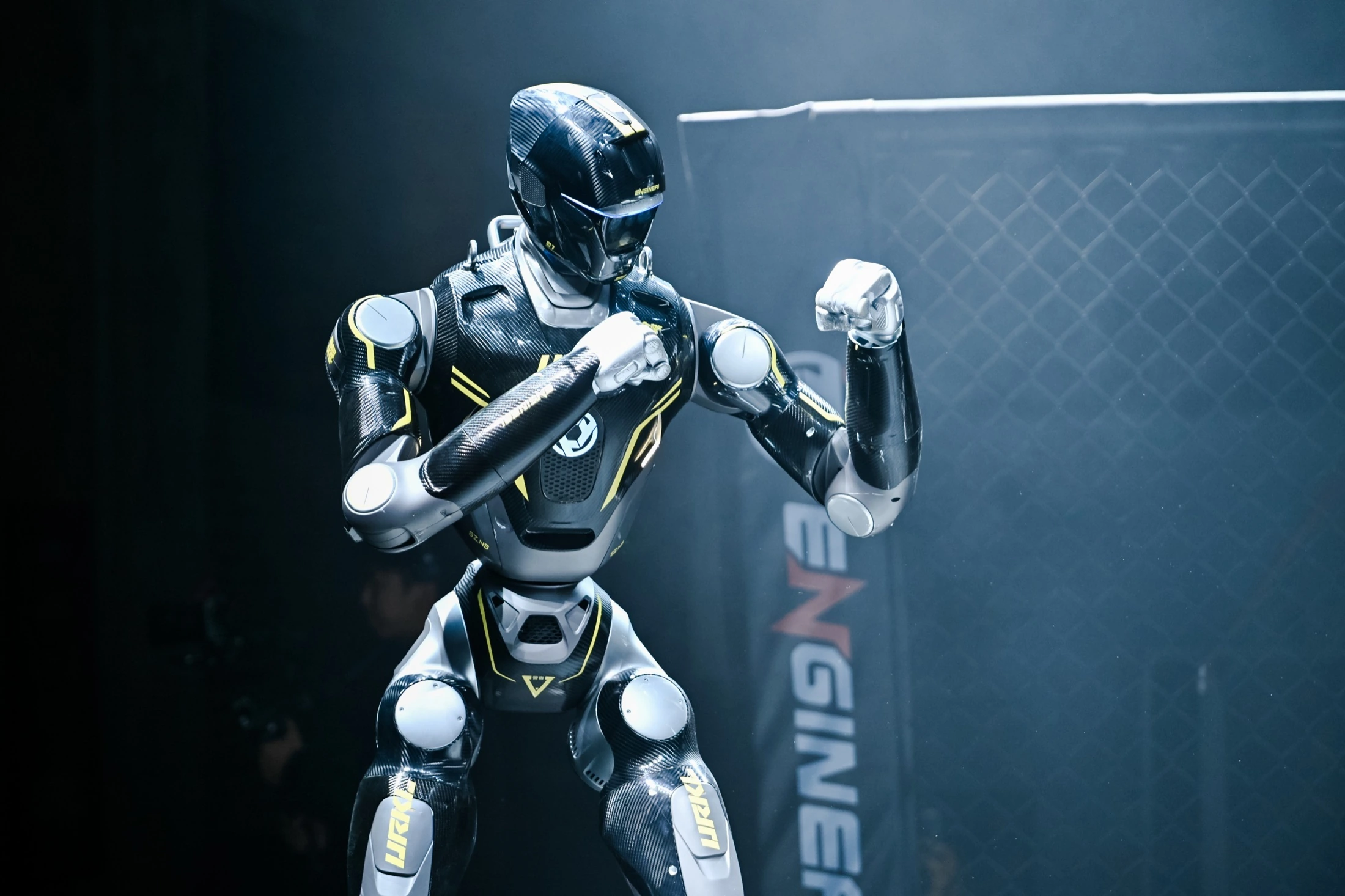
The end of a round starts a second clock. Engineers inspect joints, fasteners, cables, shells and battery condition before the machine can return. Wins and knockdowns tell only part of the result. The repair log shows whether a team can complete a season.
Armor changes the path of an impact
EngineAI offers external T800 armor for combat and performance use. The manufacturer describes it as protective, modular and quick to remove. The product page gives no data for repeated impacts. A shell may preserve a structural part while transferring load to a mount, joint or internal connection.
For competition, the relevant questions are specific: which parts are sacrificial, which can be replaced between rounds, how damage is inspected, and who decides that a robot is safe to continue.
Repair rules shape competitive fairness
Unlimited repair time favours the team with the deepest bench and largest parts inventory. A short fixed window favours modular design and rehearsed maintenance. Neither approach is inherently fair until it is written into the format.
The organizer should publish the repair clock, the number of people allowed in the work area, approved replacement parts and any parc fermé inspection. If all teams use the T800, a standard stock of controlled spares could reduce the advantage created by private access to scarce components.
Reliability needs a public record
A basic match report could include:
- minutes of repair time used;
- modules replaced;
- safety stoppages and their cause;
- whether the same robot body returned;
- withdrawal caused by damage or software failure.
This record would help audiences distinguish a tactical defeat from a technical retirement. It would also give manufacturers and teams evidence about recurring failure modes without requiring the publication of proprietary control code.
The cost belongs in the sport story
EngineAI's listed T800 prices range from US$40,500 to US$80,800 depending on edition. A competition unit may differ, and purchase price is only one component. Armor, batteries, tooling, freight, engineers and lost test time belong to the operating cost.
A season record should place competitive minutes completed per intervention beside wins, stoppages and knockdowns. That figure would make durability visible without pretending that purchase price describes the cost of competition.
EngineAI describes the T800 armor as protective and modular. No public dataset currently supports claims about match repair time, parts consumption or season cost.
Sources and reporting notes
- EngineAI: T800 protective armor
- EngineAI: T800 product specifications
- EngineAI: URKL detailed competition rules
Recommendations on repair reporting are ClankerSports editorial analysis based on the cited platform and league documents.